



out
Belle lettre du philosophe irlandais Edmund Burke sur la Révolution française et Louis XVI
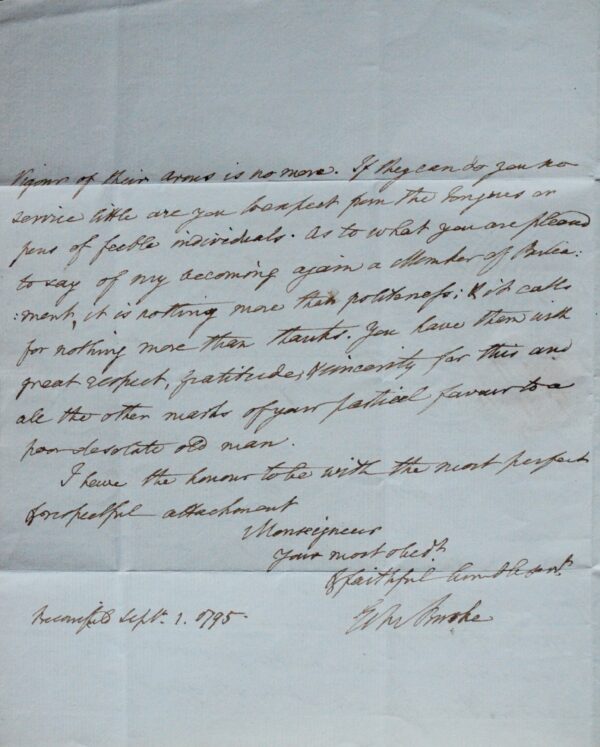
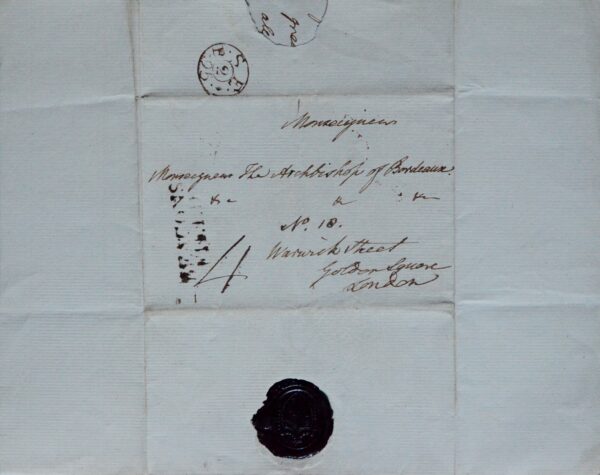
Belle lettre du philosphe et homme politique irlandais Edmund Burke adressée à l'archevêque de Bordeaux (alors en exil en Angleterre), Jérôme Marie Champion de Cicé, sur la Révolution française dont il était un fervent opposant et sur feu Louis XVI :
"Many thanks for the honor you have done me in sending me the king of France's declaration. It's a very able performance. His duty, on his acceptation to the title to an unhappy throne obliged him to something of the kinds his Majesty did what property required, & in the most proper manner. But it use produce little or not effect upon his subjects. There is no publich in France & consequently nothing which or on which publich opinion can operate. I believe the miserable French ursh for deliverance pretty generally : but they can never be their own deliverers ; & there is little to be hoped from the effort of foreign powers in your favor [...]".
Burke avait fait paraître en 1790 un ouvrage intitulé Reflections on the Revolution in France, sujet dont il n'ignorait rien.

Description
Belle lettre du philosphe et homme politique irlandais Edmund Burke adressée à l’archevêque de Bordeaux (alors en exil en Angleterre), Jérôme Marie Champion de Cicé, sur la Révolution française dont il était un fervent opposant et sur feu Louis XVI :
“Many thanks for the honor you have done me in sending me the king of France’s declaration. It’s a very able performance. His duty, on his acceptation to the title to an unhappy throne obliged him to something of the kinds his Majesty did what property required, & in the most proper manner. But it use produce little or not effect upon his subjects. There is no publich in France & consequently nothing which or on which publich opinion can operate. I believe the miserable French ursh for deliverance pretty generally : but they can never be their own deliverers ; & there is little to be hoped from the effort of foreign powers in your favor […]”.
Burke avait fait paraître en 1790 un ouvrage intitulé Reflections on the Revolution in France, sujet dont il n’ignorait rien.